
Choose your card game
Mention the card game, preferred format and experience level. A new-player table may need rule guidance, while established players may prefer a specific deck-building discussion.
Discuss a deck goal, card interactions and the trade-offs behind each choice. Advice is about play and learning, not a promise of tournament results or financial value.

Keep the agreed scope, timing and next contact in one place. A written summary makes it easier to return to the decisions without relying on scattered messages.
Confirm the meeting time, available seats and what players should bring. League participation, deck restrictions and any entry conditions should be clear before the visit.
A change of card-game format or group size may affect table arrangements. Confirm the next meeting and any league rules independently rather than assuming that the previous session’s conditions remain the same.
Before the first game, check the format and agree how unfamiliar interactions will be resolved. Keep personal items in a clear area and ask before touching another player's cards. For a longer session, plan a natural point to change opponents or take a break. These small agreements make a mixed-experience table easier to manage without interrupting every turn. A clear record makes a change easier to discuss without losing earlier decisions.
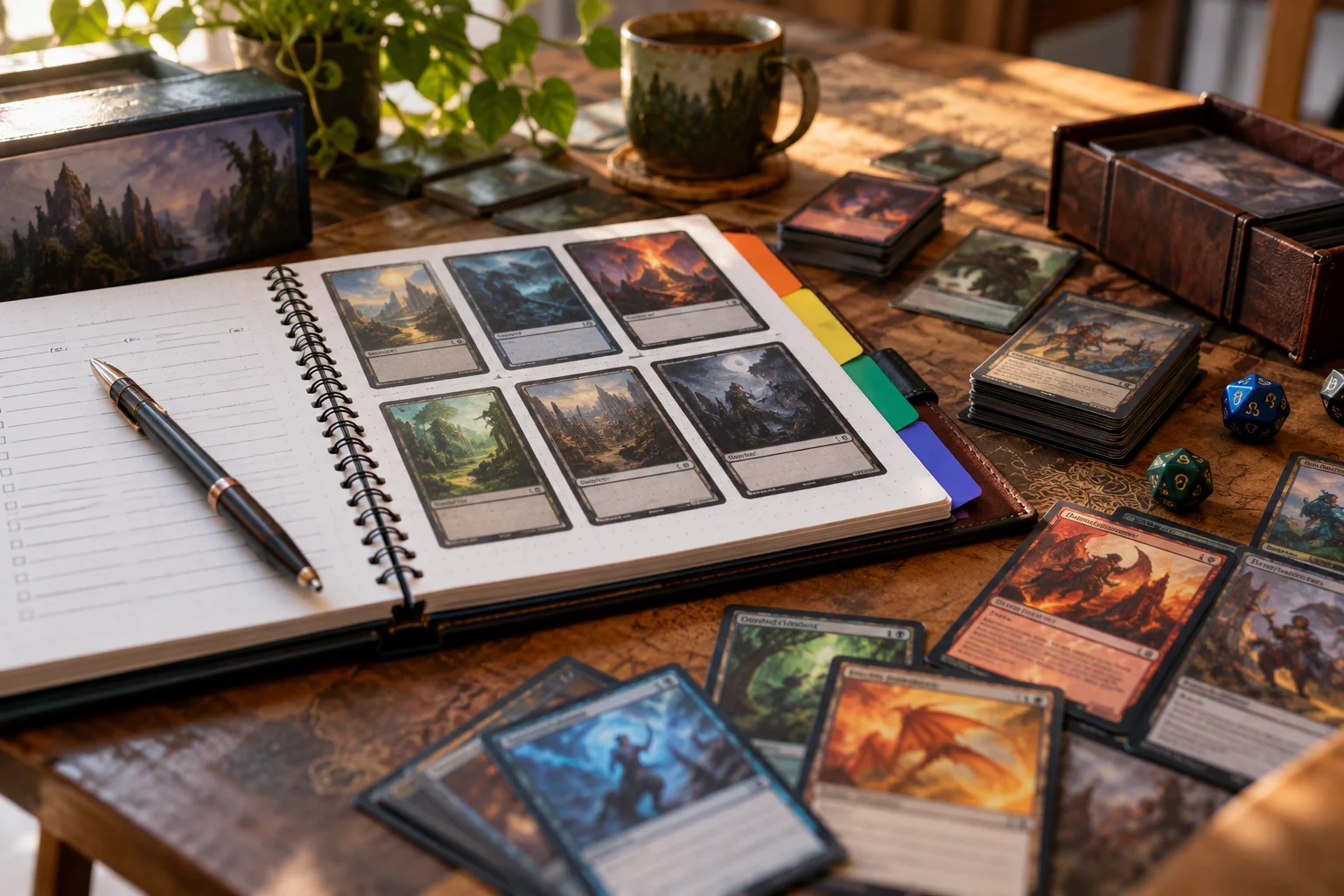
Describe what you want the deck to do and which cards or formats you use. A workshop can compare choices and practise interactions without treating card value as an investment recommendation. Bring sleeves, a playmat or your existing deck when appropriate, and confirm whether introductory materials are available before assuming the club supplies them.
Mention the card game, preferred format and experience level. A new-player table may need rule guidance, while established players may prefer a specific deck-building discussion.
Confirm the meeting time, available seats and what players should bring. League participation, deck restrictions and any entry conditions should be clear before the visit.
Play at an agreed pace and ask about unfamiliar interactions. Respect shared tables, other players and the handling of cards that belong to someone else.
Review interesting decisions and arrange any next visit separately. A community meeting does not create an obligation to buy cards or join a continuing programme.